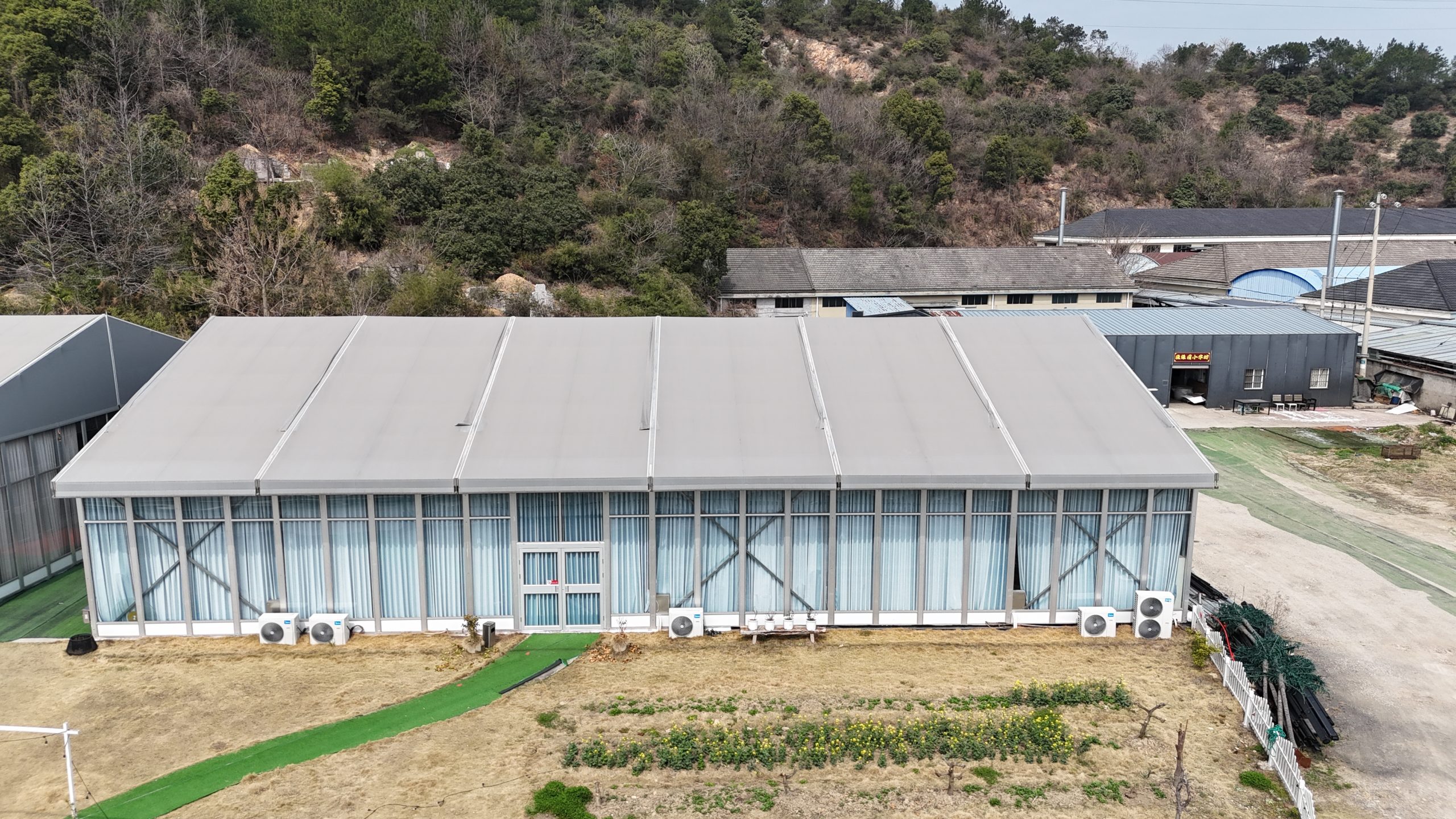

A premium destination wedding is basically a pop-up venue with high stakes. It has to look stunning in photos, keep guests comfortable, and pass inspections from venue risk teams and local authorities.
That’s why glass-walled aluminum marquees — and their close cousins with transparent PVC walls — are becoming so popular at the high end of the market. They don’t just “look clear.” They turn the landscape into the walls of the room: sunset views, coastlines, mountains, city skylines, candlelight — all without sacrificing the engineering logic of a modular structure.
This guide breaks down what’s really going on behind that 360° view, and how to evaluate vendors before you commit.
What a “Glass-Walled Aluminum Marquee” Really Is
In buyer terms, this is not a regular pole tent with a few clear windows.
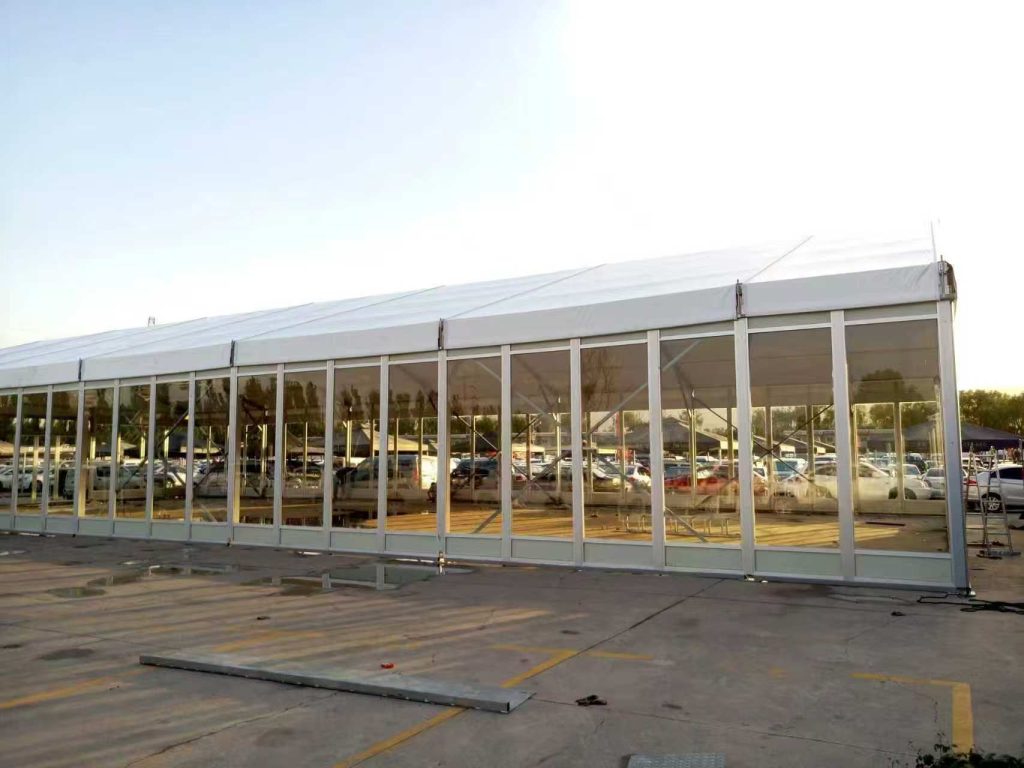
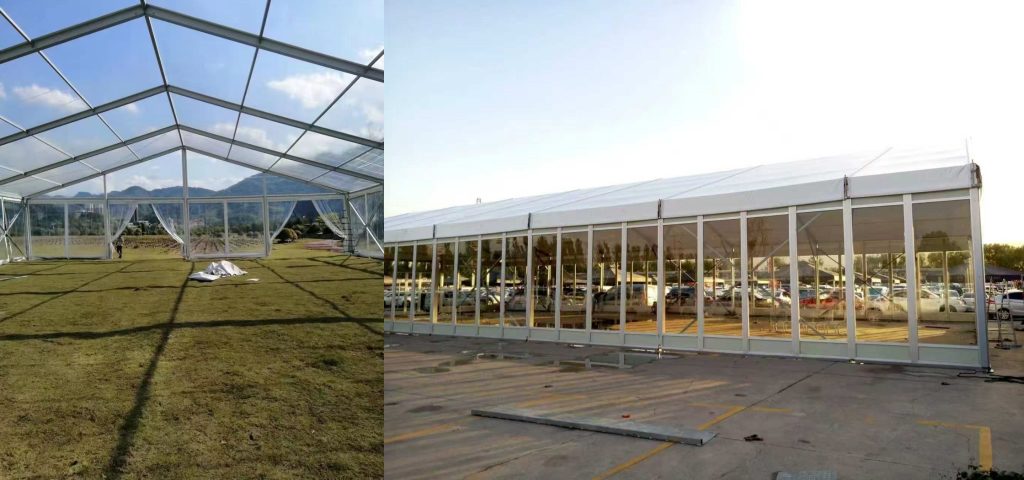
A glass-walled aluminum marquee is a clear-span, modular aluminum structure designed to accept rigid wall systems (tempered glass panels) or flexible transparent walls (clear PVC). It’s typically paired with either:
- A standard opaque roof for light control, or
- A clear/transparent roof where the “night sky ceiling” is part of the experience
You’ll also hear terms like transparent marquee tent for weddings or clear top wedding tent with glass walls. These usually describe the same family of solutions: a clear-span frame with transparent roof and/or wall elements, designed for high-visibility venues.
The key difference is structural: the frame is designed as an engineered system — profiles, bays, bracing, connections — so the walls can be integrated cleanly and safely.
Glass Wall Wedding Tent Evaluation: Start with Requirements
Most “transparent tent” disappointments come from choosing a look before defining requirements. Here’s what to think about first:
1) View + Photography Priorities
- Is the main reason for transparency the nightscape (city lights / stars) or the daytime panorama?
- Are you trying to eliminate visual clutter (poles, guy lines) from ceremony sightlines?
2) Climate Reality (Not Your Pinterest Board)
- Coastal wind exposure, humidity, and sudden storms change everything
- Desert locations create big day–night temperature swings
- Mountain venues stack wind + temperature drops after sunset
3) Site and Surface Constraints
- Grass, concrete, sand, mixed surfaces, rooftop decks — all change anchoring and flooring decisions
- Ask early whether the venue allows ground penetration (stakes) or requires ballast
4) Schedule and Logistics
- Destination weddings often have tight load-in windows
- Glass systems typically add packaging, handling, and installation complexity
Pro Tip: If you can’t describe your weather risk and anchoring approach in one paragraph, you’re not ready to commit to fully enclosed transparent walls.
Tempered Glass Tent Walls vs. Clear PVC Walls
If you’re comparing premium options, treat wall choice as a set of tradeoffs — not a “better/worse” debate.
1) Visual Clarity (What the Guests and Cameras Will See)
Tempered glass walls tend to deliver the cleanest architectural look: straight lines, crisp reflections, and fewer distortions.
Clear PVC walls can be visually excellent in the right system — but flexible films can show wrinkles, waviness, or optical distortion, especially under harsh lighting or when they’re not tensioned perfectly.
If your entire concept is “the landscape is the décor,” glass usually wins on pure optics.
2) Comfort: Heat Gain, Heat Loss, and Condensation Risk
Transparent enclosures can behave like a greenhouse. Even at luxury budgets, comfort only happens when someone owns the plan.
- Heat gain (daytime sun) needs shading strategy, ventilation, or HVAC planning
- Heat loss (night) needs heating capacity and draft control
- Condensation is a humidity + temperature problem (dew point), not a mystery defect
Practical takeaway: Glass vs. PVC doesn’t magically solve comfort. The bigger difference is whether the wall system supports tighter seals, better door systems, and a more controlled interior.
3) Sound and Acoustics (Often Overlooked Until Speeches Start)
Glass surfaces reflect sound. This doesn’t mean “don’t do glass.” It means:
- Plan speaker placement
- Add soft goods strategically (drapes, florals, rugs)
- Schedule a sound check in the actual enclosure
4) Wind Behavior and “Fully Enclosed” Risk
Sidewalls change wind dynamics. A structure that’s open and breathable behaves differently once you seal it.
⚠️ Warning: In high-wind conditions, “more enclosed” is not automatically “more protected.” Your vendor should be able to explain the wind strategy, sidewall policy, and evacuation plan for your specific site.
5) Transport, Install Time, and Breakage Handling
- Glass wall systems add crating, careful handling, and more labor
- PVC walls are lighter and often faster to deploy
If your destination venue has limited access, steep paths, or tight timing, PVC may be a more reliable operational choice — even if glass is the aspirational look.
JM TENT positions its event structures around modular aluminum systems and configurable wall options, including glass walls and PVC walls. You can review the configuration concept on JM TENT’s Outdoor Heavy Duty Luxury Glass Wall Marquee Tent for Events product page.
