
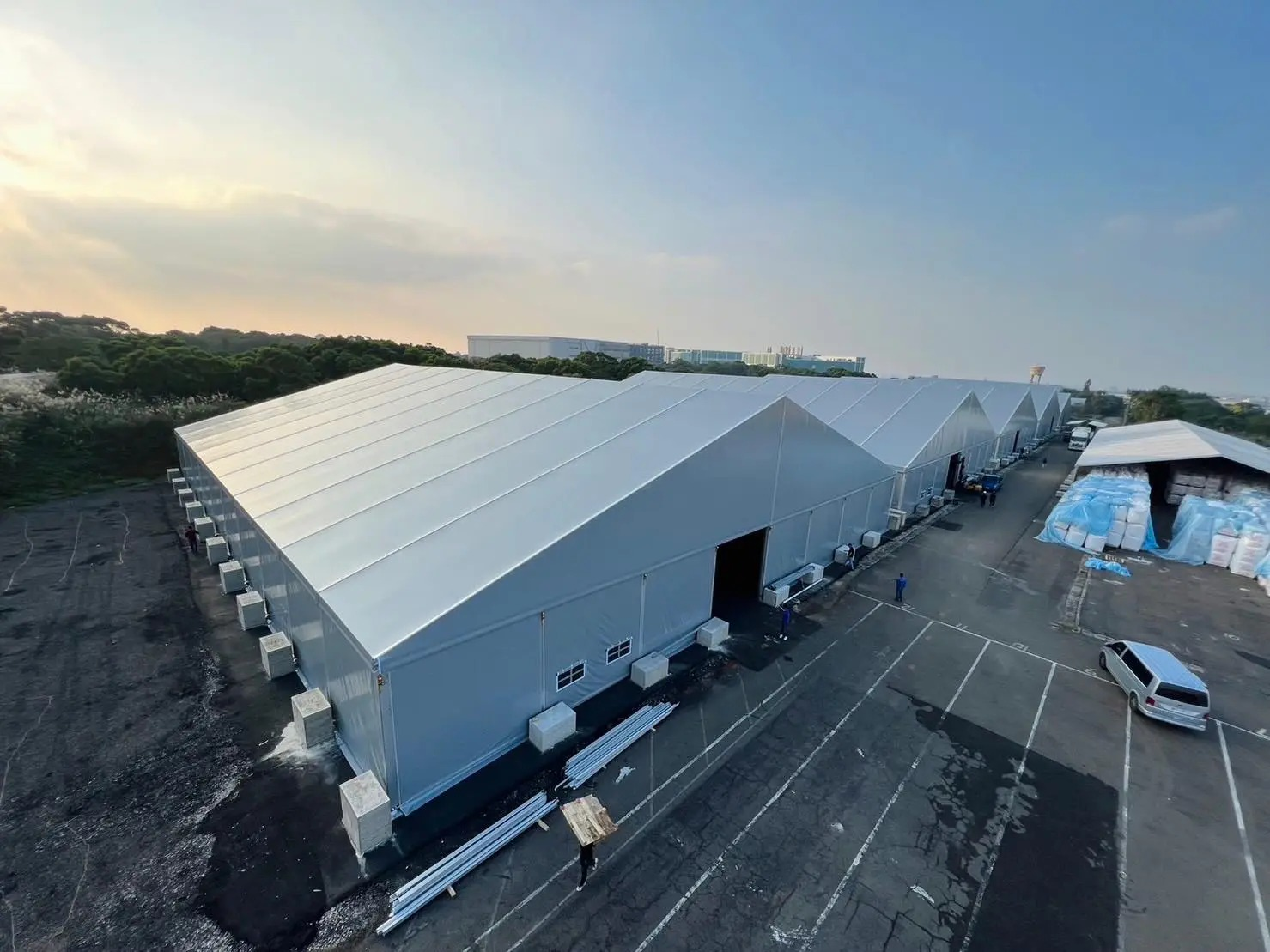

Introduction: Orders suddenly double, but your warehouse is totally full, left no space. Seasonal peak requires extra storage, but renting a fixed warehouse means a long‑term lease. Factory expansion also need take long time, but production can‘t wait so long. Aluminum prefabricated tents might solve all these warehousing problems. From a practical perspective, we find out the values of “temporary storage”.
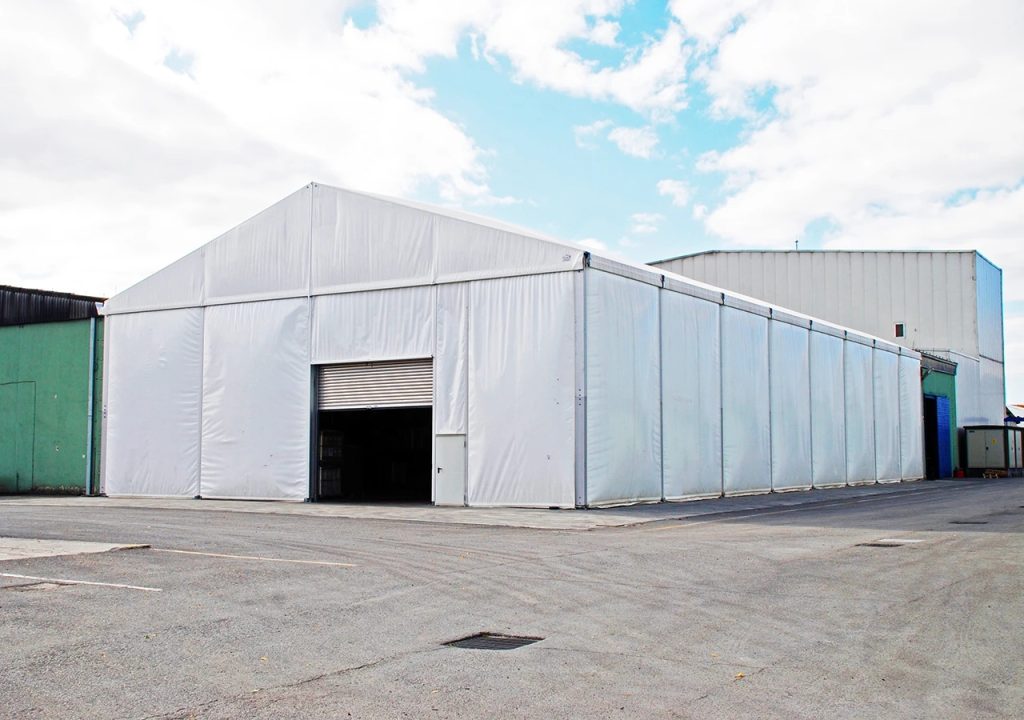
The solutions of traditional warehouse have only a few kinds:
Renting a warehouse: Location may not be ideal, leases are at least six months to a year, and you pay rent even during the off‑season.
Building a new facility: Permits take forever (six months is fast), investment starts at hundreds of thousands, and by the time it’s ready, the peak season is over.
Outdoor storage: Wind, sun, and rain damage your goods, there are also serious safety risks.
So, this tent is a solution that can be built quickly like building blocks, expanded as needed, removed when not in use, and reused multiple times.
It‘s not a simple tent, but an option between a temporary structure and a permanent warehouse. We’ll look at how it solves storage headaches from the below 5 aspects .
Value 1: Speed: Need a few days from decision to operation
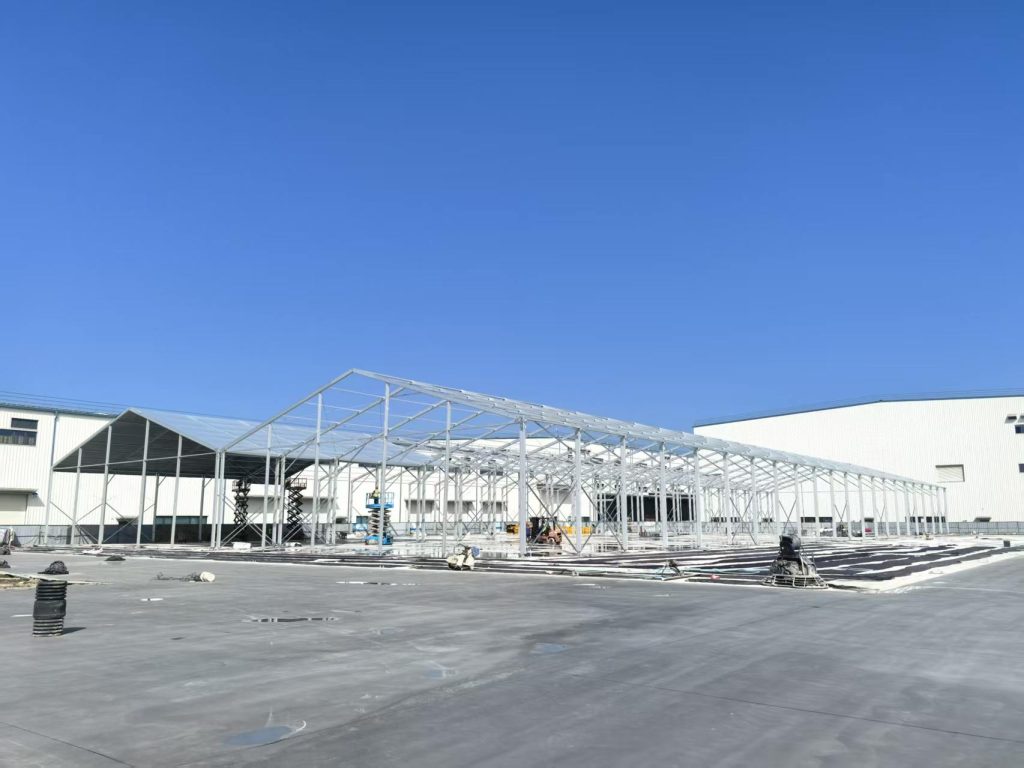
Unlike traditional buildings, prefabricated tents use modular design + pre‑manufactured components. All parts are made in the factory; only assembly is needed on site.
Actual speed reference:
A 2,000 m² tent can be fully erected by a professional crew in 2 days
1,000 m² of storage space can be ready in 1 day
In urgent cases, it can be used within 3 hours
Real example
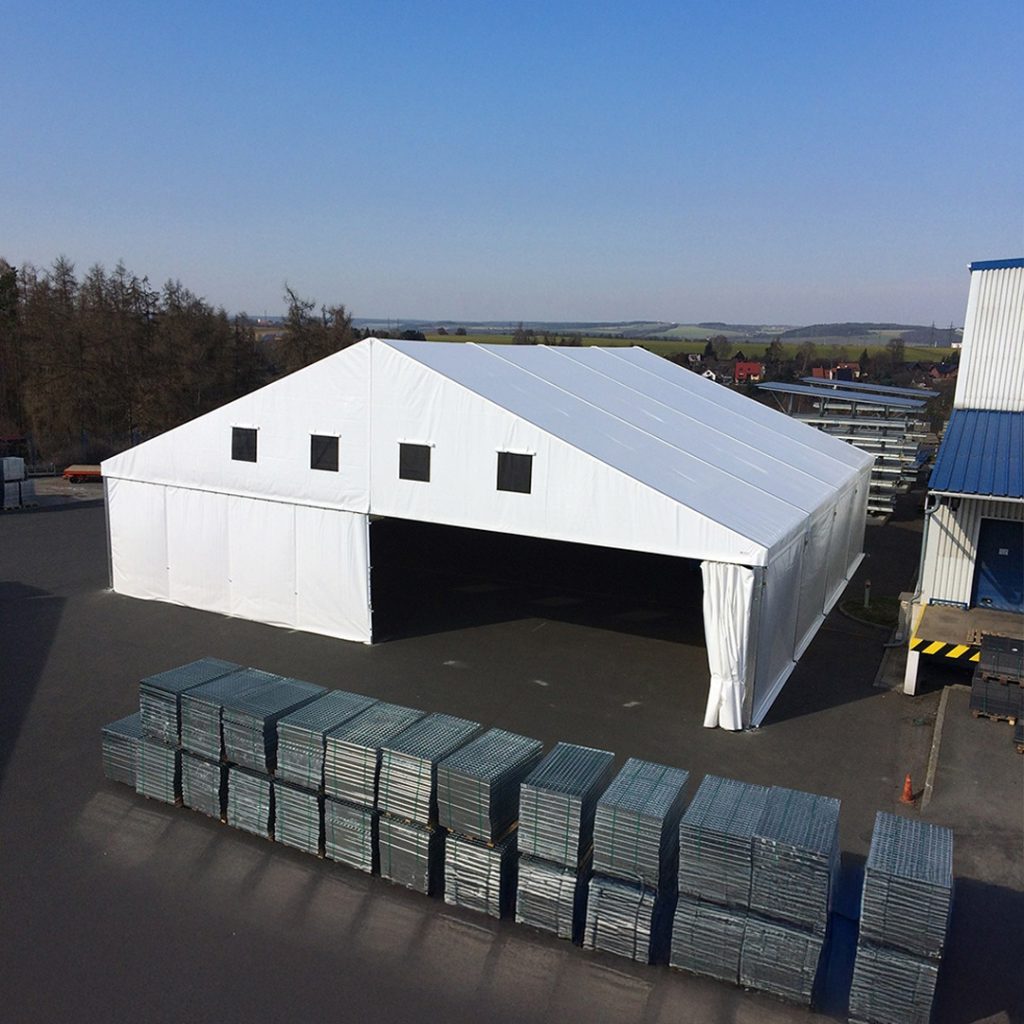
In 2024 we built double tents for Changzhou XingYu Automotive Lighting Systems Co., LTD. Due to orders exploded and old workshop was full, and permits for a new building would take most of a year. From measure to build, we spent one month to finish this project. This area of storage tent is over 5000 m²。 The width is 27 m and length is 105 m. Another tent is 18 x 105 m. From site survey to completion was only 15 days, “just like building with blocks. Every day I could see progress.” the Director said. The key point is that the tents erected within one month, perfectly in time for the production peak.
Advice: If you‘re worried about peak‑season storage, contact us now, our team will provide a quotation plan
Value 2: More Cost-saving than tradition Builds
Which aspects the cost advantages of prefabricated tents will present?
- Construction cost
No expensive concrete foundation required because low ground requirements significantly reduce foundation costs
- Time cost
Traditional building permit + construction: 6+ months. And some areas has a high requirement, so that the permit is more difficult. So most owners choose prefabricated tents.
- Operating cost
Translucent roof fabric can let natural light in, and not need for artificial lighting during the day, saving electricity; It can be disassembled repeatedly and reused elsewhere.
Advice: When calculating costs, don‘t just value the unit price. Factor in “time cost” and “flexibility value”. Often, the revenue from capturing peak season far outweighs the tent‘s upfront investment.
Value 3: Flexibility: change as needed
The biggest feature of prefabricated tents is flexibility:
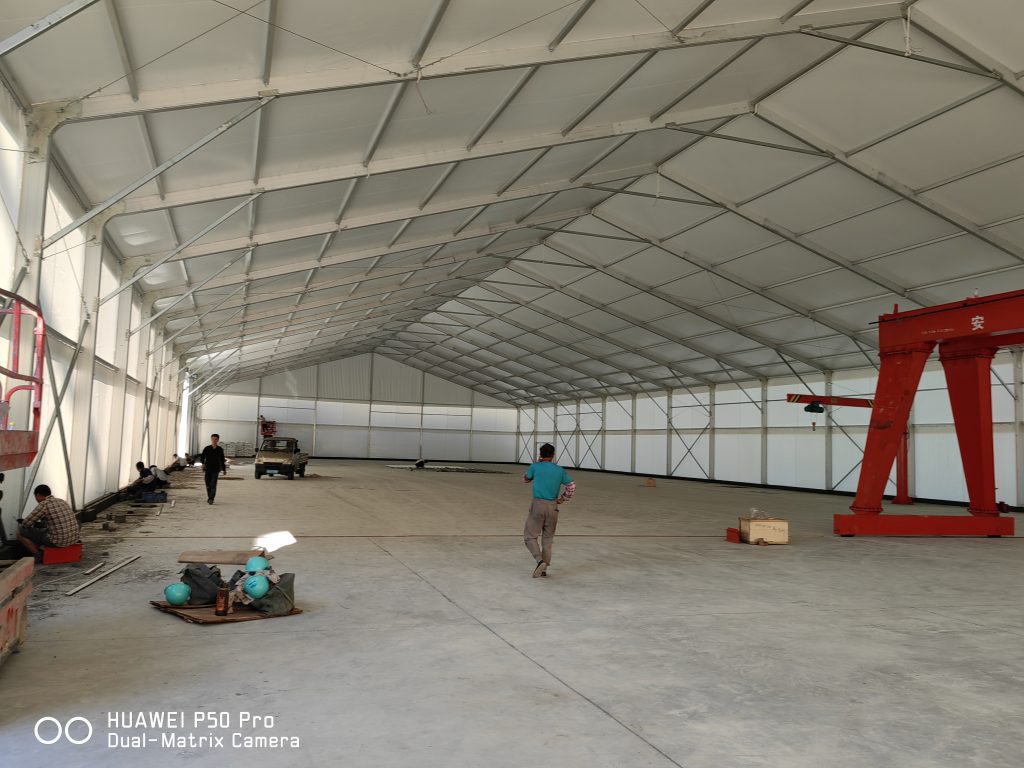
Spans (widths) from 3m to 50m, covering most storage need and extend the length indefinitely by adding as many bays as you need.
Clear span interior (no columns): 100% usable space, forklifts can move everywhere without obstacle.
A user‘s real feedback: “I have used this tent for nearly 3 years. The flexibility is amazing. Last month we changed our internal layout to match order adjustments and it took half a day. In a traditional building, knocking down and rebuilding walls would take at least two weeks.”
Advice: If your industry has clear peak and off‑peak seasons, run the numbers. Can the additional orders you capture during peak season cover the tent‘s cost? The answer is almost always yes.
Value 4: Durability: Don’t be misled by the word “temporary”
Some one thinks “Isn‘t this just a tent? Can it really be used as a warehouse? Can it survive a typhoon or heavy rain? How long will it last?” And I think these concerns are normal, but we use the industrial grade aluminum.
Main frame: high‑strength aluminum alloy (e.g., 6061/T6), anodized for corrosion resistance that won’t rust
Wind resistance typically 80‑100 km/h (Beaufort Force 8‑10) , if reinforced, it will suffer from more
Fire rating up to B1 (self‑extinguishing), compliant with safety standard.
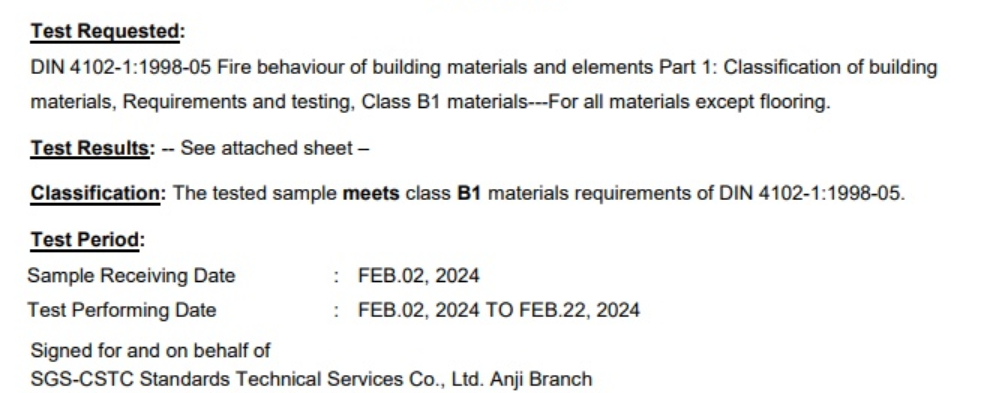
OUR FABRIC TEST
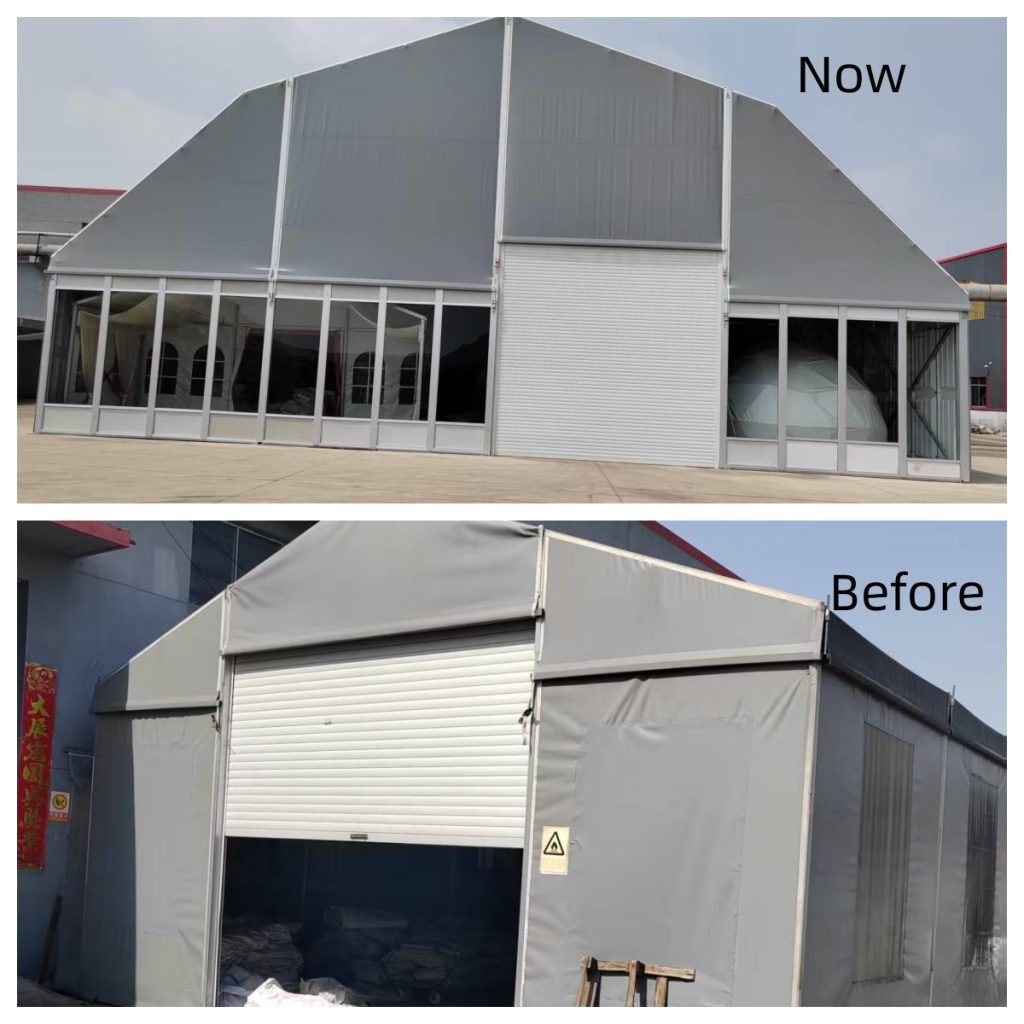
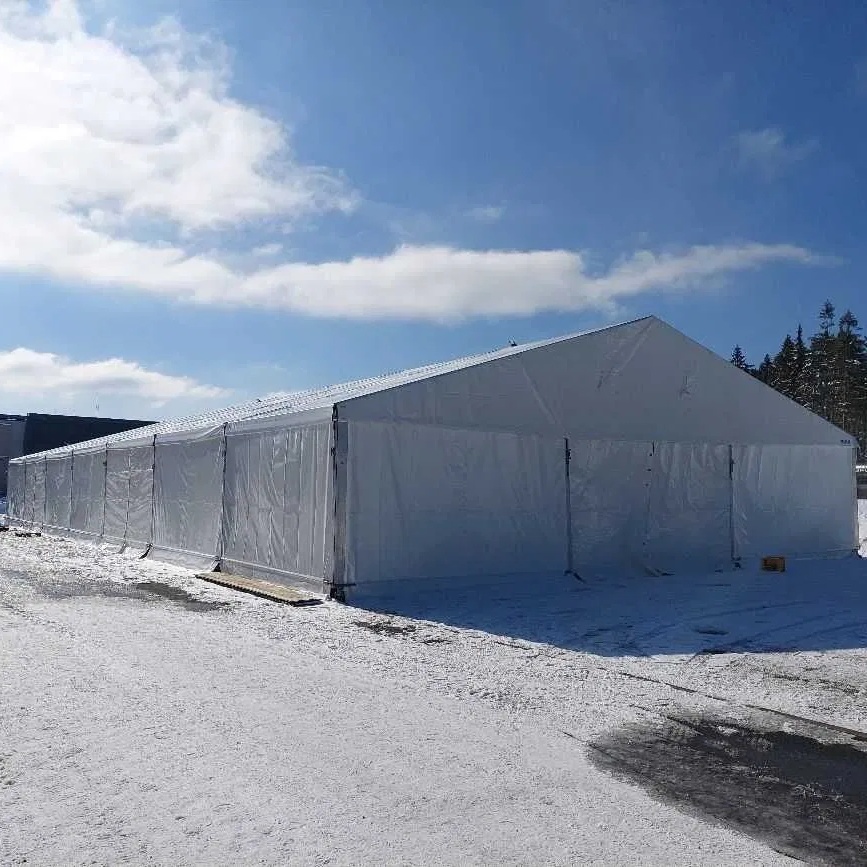
Aluminum frame designed for 15+ years, and PVC fabric is recyclable and durable. One user commented: “After nearly 3 years, the aluminum frame hasn‘t rusted, the fabric hasn’t torn. Routine maintenance is just dusting — much less work than a traditional warehouse.” And our factory also use tent as workshop and storage. To expand, we have replace twice. The below is the comparison of photos
Environmental adaptability
Operating temperature range: -30°C to +70°C (-22°F to +158°F)
Optional insulation layers, radiant barriers, exhaust fans for extreme weather
Waterproof, UV‑resistant, mold‑resistant.
Advice: When choosing a tent, focus on two things: frame material (recommend 6061/T6 aluminum) and fabric quality (recommend B1‑rated PVC). Don‘t buy cheap materials to save a little because this is a long‑term investment.
Value 5: Adaptability: Works on concrete, grass, dirt, almost any ground
All ground types covered
| Concrete, asphalt | Ballast fixing (water tanks or concrete blocks weigh down the feet) |
| Grass, dirt | Spiral ground anchors (screwed into the ground like a big screw — minimal turf damage) |
| Sand, gravel | Special anchoring solutions |
| Rooftop terrace | Lightweight design + ballast, stays within load limits |
Advice: If you are unsure whether your site is suitable? Take a few photos and send them to us. We will give you a professional assessment and recommend the right fixing method.
If you are considering a temporary storage solution, start with these 3 steps:
- Clarify your needs: How much area? What kind of goods? Any special requirements (temperature, humidity, light)? How long will you need it?
2. Assess your site: Where is it? What is the ground surface? Any slope or obstacles? Take a few photos.
3. Consult us: Please provide the above information and ask for recommended size, fixing method, and a rough quote.
