
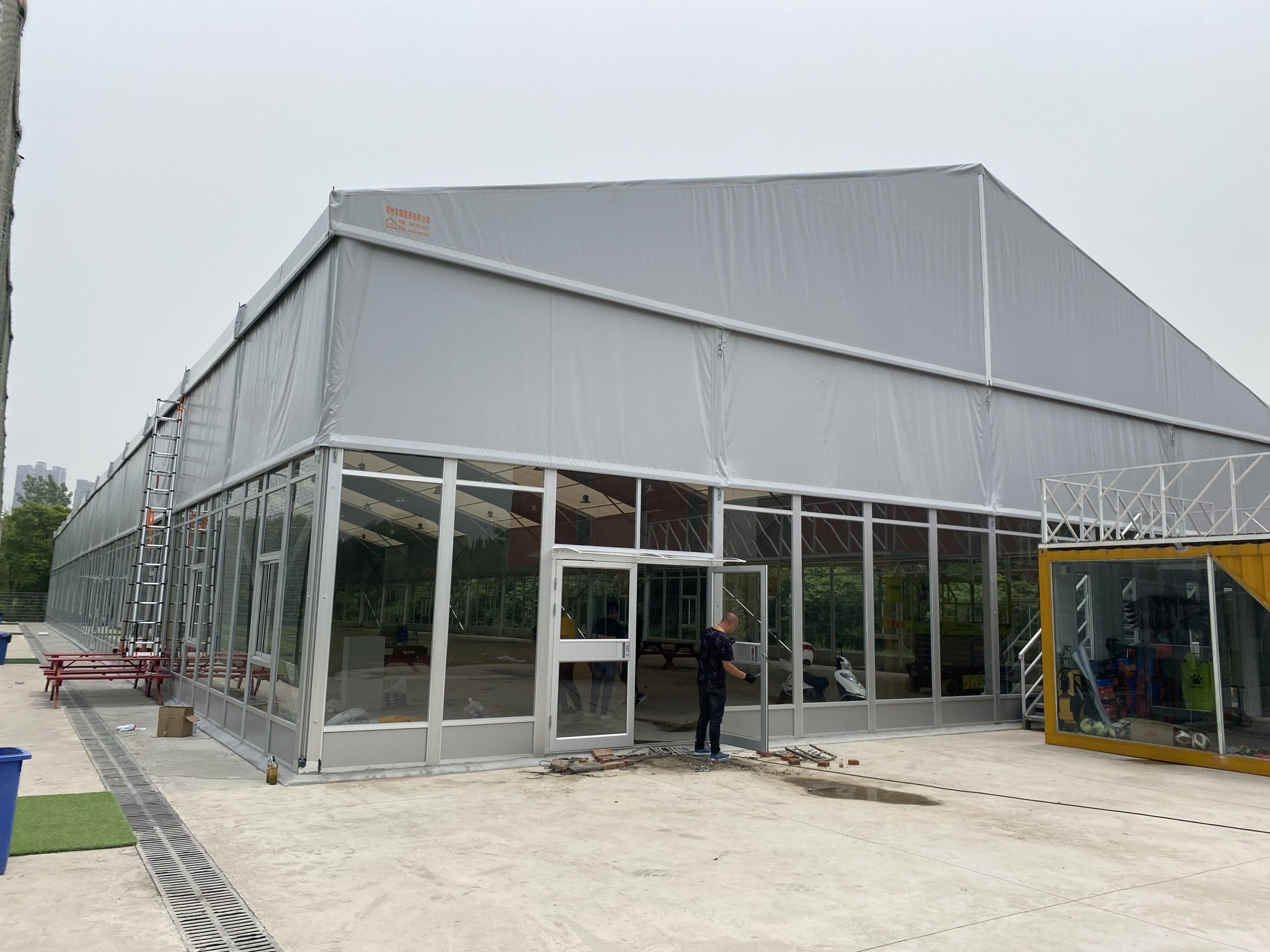

Cities and venue operators are under pressure to do two things at once: deliver more covered space for events and community programs, and show real progress toward low-carbon, resilient infrastructure.
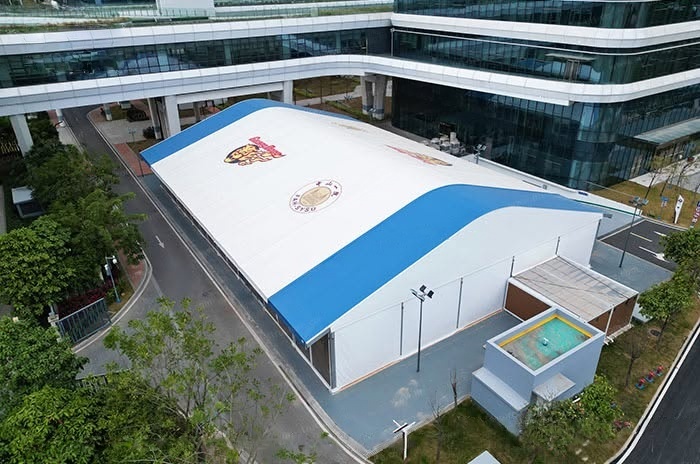
For certain uses — training fields, warm-up halls, covered concourses, temporary fan zones, seasonal community ice rinks, or multipurpose pavilions — aluminum fabric structures are increasingly being considered alongside steel-and-concrete construction.
The lifecycle logic can be compelling: less material, faster installation, less disruption, and a better end-of-life story when the structure can be relocated, reused, or taken apart with a recycling plan.
This guide explains how to evaluate that trade-off — using the Envision sustainability framework (built for infrastructure projects) as a practical lens.
Start with the Right Sustainability Question
When decision-makers compare a fabric structure to a conventional build, the most useful question usually isn’t “Which is greener?” It’s:
“What is the lowest-impact way to provide this covered function for the next 10–30 years — given our site, schedule, and community needs?”
That framing does two things:
- It keeps you from optimizing for a single metric (like recycled content) while ignoring the bigger drivers (like structural mass, site works, or demolition).
- It aligns with Envision’s “decision-making guide” philosophy, which evaluates projects across environmental, social, and economic dimensions — not just materials.
Pro Tip: If your program might change (new tenant, new league, new community uses), adaptability is not a “nice-to-have.” It’s a sustainability strategy.
The Envision Lens: Where Fabric Structures Map to Infrastructure Sustainability
Unlike building-only rating systems, Envision is designed for infrastructure projects and evaluates performance across five categories: Quality of Life, Leadership, Resource Allocation, Natural World, and Climate & Resilience.
In practice, you can treat the Envision rating system as a structured way to connect sustainability intent to procurement and documentation.
You don’t need to be chasing an Envision award to use its logic. For stadium districts and city venue projects, it’s a useful checklist to make sure sustainability is not reduced to a marketing bullet.
Here’s how aluminum fabric structures commonly intersect with Envision-style thinking.
1) Resource Allocation: Material Efficiency, Waste, and Circularity
Resource Allocation is where the material choice and construction method show up most directly.
A typical fabric structure uses:
- A rigid frame (often aluminum or steel)
- A tensioned membrane
- Modular components designed for fast assembly
The sustainability value here is less about “fabric vs. concrete” as a slogan, and more about whether the project:
- Uses less structural mass for the same covered area
- Reduces construction waste through prefabrication/modularity
- Has a credible plan for end-of-life reuse and recycling
2) Quality of Life: Disruption, Safety, and Community Access
Stadium and community venue construction isn’t just a carbon problem — it’s an operational problem.
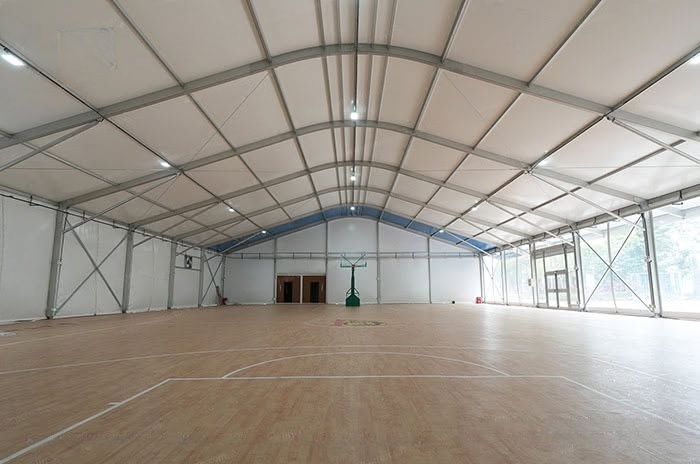
A faster-build structure can:
- Reduce the period of noise, traffic, and restricted access around the venue
- Shorten time-to-benefit for community programming
- Reduce conflict with event calendars
3) Leadership: Procurement Discipline and Lifecycle Economics
For public projects, leadership often looks like process quality:
- Transparent decision criteria
- Documented trade-offs
- Stakeholder engagement
- Lifecycle cost and maintenance planning
4) Climate & Resilience: Adaptability and Hazard Planning
Resilience isn’t just “survives a storm.” It also means:
- Can your covered space function during changing climate conditions?
- Can you adapt the structure (size, use, systems) without demolishing it?
- Can you relocate or expand rather than rebuild?
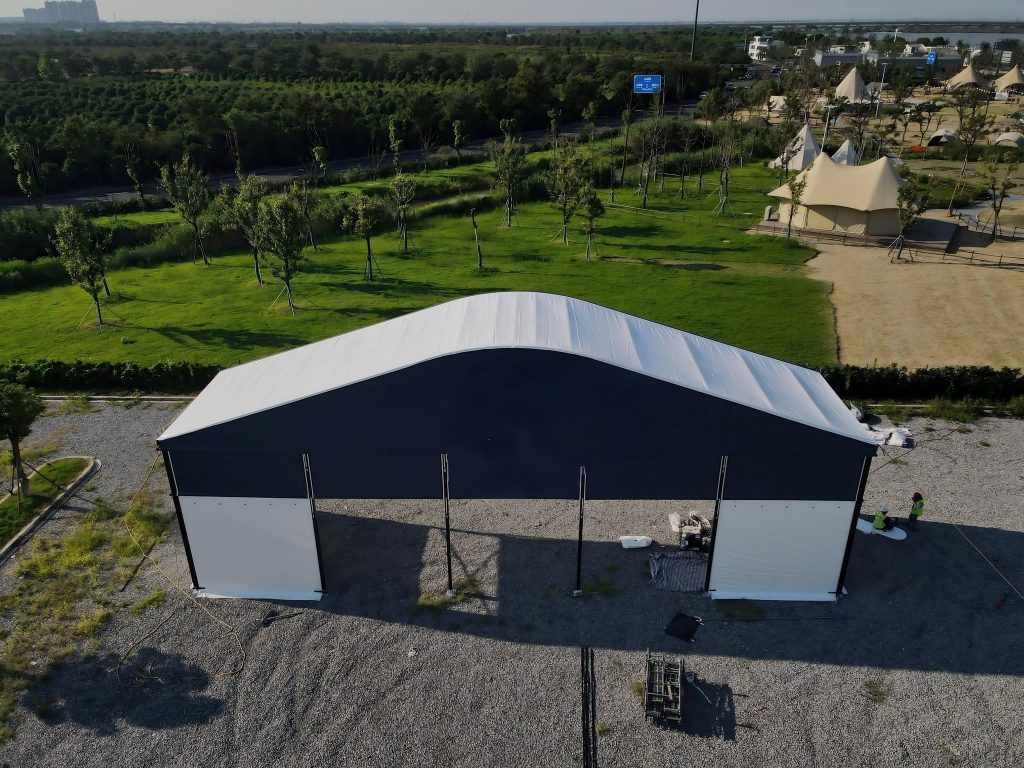
Why Aluminum Matters: The Circularity Case (and What It Does Not Prove)
Your direction is clear: follow the low-carbon trend and explain aluminum’s 100% recyclability.
The safe, credible way to say it is:
- Aluminum is infinitely recyclable — it can be recycled repeatedly without losing fundamental properties.
- Producing recycled aluminum takes far less energy than primary production — recycling saves about 95% of the energy compared with producing aluminum from ore.
For stadium districts and community venues, the frame is a significant portion of the system’s material value. That’s why recyclable aluminum isn’t just a feel-good concept: it can materially improve the economics of salvage and the credibility of an end-of-life plan.
Key Takeaway: “100% recyclable” is a capability, not an outcome. The outcome depends on design-for-disassembly, salvage planning, and real recycling pathways.
In other words: aluminum recyclability supports a stronger end-of-life plan — but it doesn’t automatically make a project low-carbon. The project team still needs to prove (or at least responsibly estimate) lifecycle impacts.
Why Communities Consider Aluminum Fabric Structures Instead of Permanent Steel/Concrete
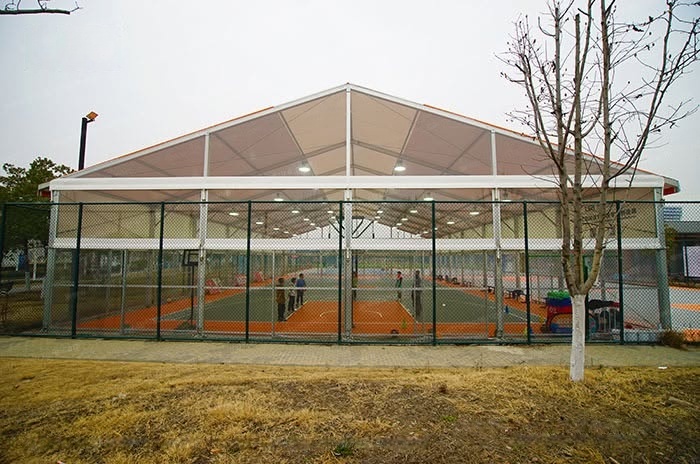
For stadium districts and community venues, the “why” typically falls into four practical buckets.
1) Speed to Covered Capacity (Without Pausing the Calendar)
A conventional build can collide with:
- Seasons
- Booked events
- Procurement timelines
- Neighborhood tolerance for disruption
A modular structure can sometimes be installed faster. The sustainability tie-in is indirect but real: shorter site time often means less disruption and a quicker return of community access.
2) Right-Sizing for Uncertain Demand
Cities often don’t need a single, forever building. They need flexible covered space that can shift between:
- Sports training
- Seasonal markets
- Community health events
- Emergency response staging
- Ticketing/security expansions
When demand is uncertain, building a permanent structure that is oversized “just in case” can be a sustainability miss. A modular fabric structure can be scaled or reconfigured more realistically — reducing the risk of creating an underused asset.
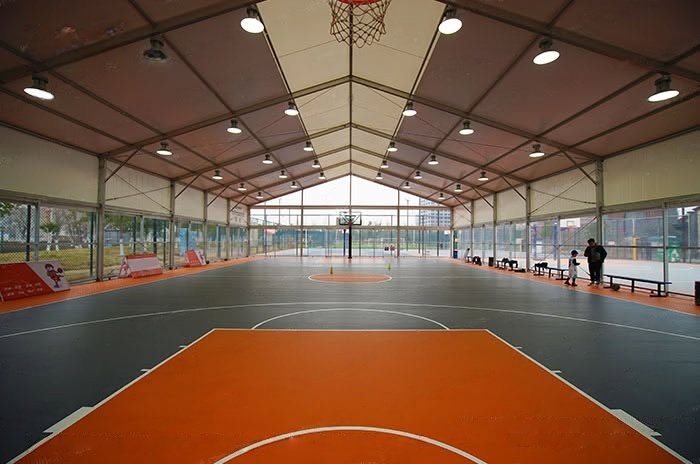
3) A Cleaner End-of-Life Story
Concrete-and-steel projects can be durable, but end-of-life is often demolition-heavy.
A well-designed modular structure can potentially be:
- Relocated
- Repurposed
- Deconstructed into recoverable components
4) Lower Upfront Material Intensity
A roofed, column-free space is a structural problem. The more structural mass you use, the more embodied emissions you typically embed upfront.
The Buyer’s Checklist: How to Evaluate “Green” Claims for a Venue Fabric Structure
If you want this article to be useful for procurement, here’s the evaluation framework that tends to hold up.
A) Materials & Circularity
Ask your supplier:
- What is the frame material and alloy grade (and is documentation available)?
- What recycled-content claims are being made — and what’s the source?
- Is the structure designed for disassembly (bolted connections, modular members) rather than demolition?
- What is the end-of-life plan: resale, relocation, recycling partners, salvage value assumptions?
B) Construction Impacts & Site Disruption
Ask:
- What is the on-site installation sequence and expected duration?
- What equipment is required (cranes, lifts) and what site access is needed?
- What foundations/anchoring approach is assumed (and what drives cost/impact)?
C) Resilience and Code Compliance
For stadium and community uses, “green” is irrelevant if you fail inspection.
Ask for the documentation pathway:
- Which codes/standards will the engineer design to (jurisdiction dependent)?
- What wind/snow/seismic assumptions are used (site-specific)?
- Fire and egress considerations for assembly occupancies: what is included and what is excluded?
⚠️ Warning: Don’t accept generic wind/snow ratings as proof. Require project-specific engineering aligned to local code and the actual anchoring/foundation strategy.
D) Operations & Maintenance
Ask:
- Expected service life assumptions for the frame and membrane (with conditions)
- Inspection and maintenance requirements (membrane tensioning, hardware checks)
- Replacement cycle planning (what components typically wear first?)
Where JM TENT Fits (Without Turning This Into a Sales Pitch)
If you’re evaluating aluminum fabric structures for venue or community infrastructure, suppliers should be able to speak in the language of:
- Documentation
- Compliance pathways
- Lifecycle planning
- Modularity and future adaptability
For example, JM TENT builds modular aluminum-alloy frame structures (commonly specified as 6061/T6 in product profiles) designed for rapid installation and future extension — useful traits when your covered-space needs may change over time.
