
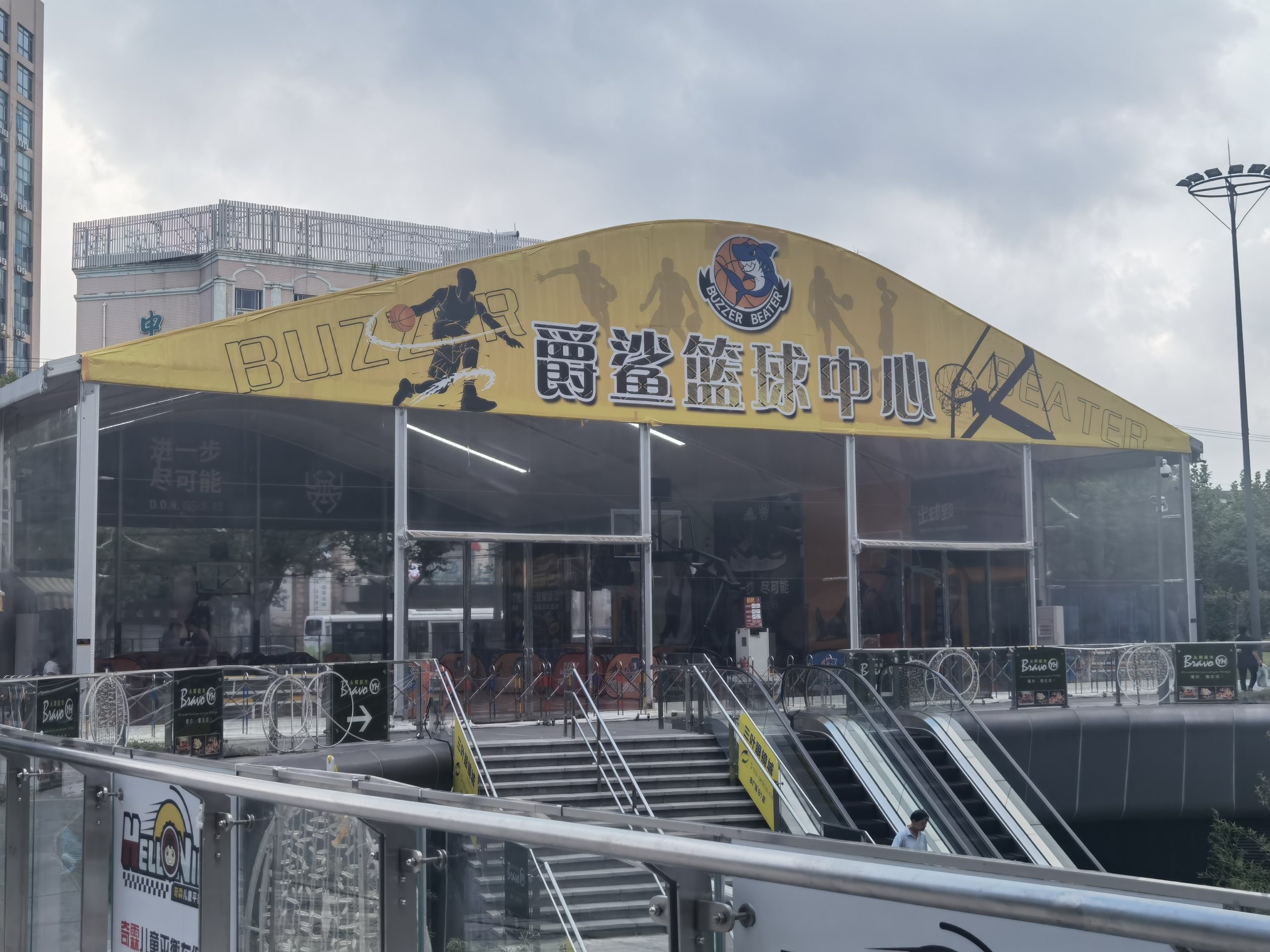

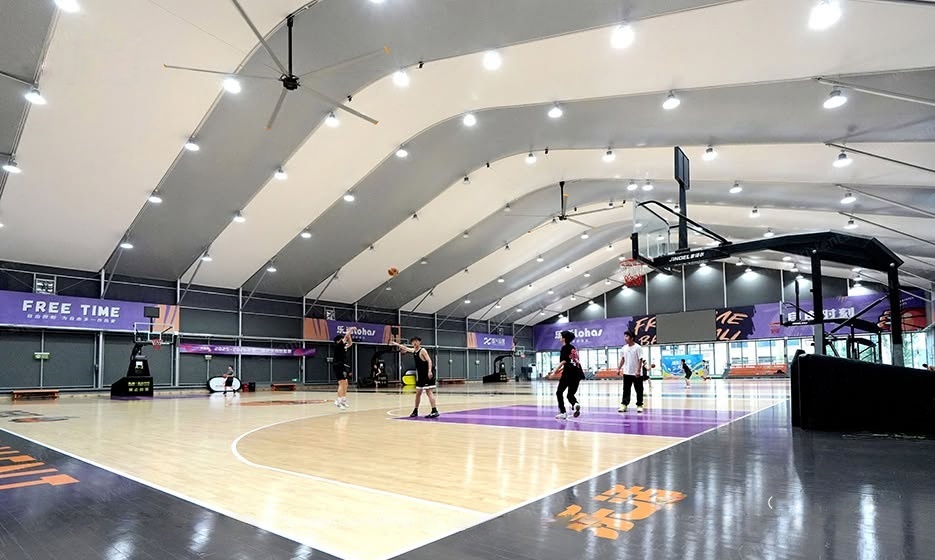
A cold-climate sports tent can fail in predictable ways: heat escaping through uninsulated fabric, drafts that make heating pointless, and condensation that leads to drips, ice, or mold.
If you’re evaluating an aluminum sandwich panel sports tent for a 10,000–20,000 sq ft fieldhouse in a cold region, the winning approach isn’t just adding a “thermal liner.” It’s about choosing a properly engineered system—with insulated walls, roof, base, doors, and joints—that works as a complete building envelope.
This guide explains how rigid aluminum arch tents with sandwich panel wall systems deliver winter-ready performance, what details matter most, and what to ask suppliers before you commit.
Why Aluminum Sandwich Panel Tents Are Different
Unlike traditional fabric tents or air-supported domes, aluminum arch tents with sandwich panels offer:
- A rigid, permanent-feel structure that withstands snow loads and high winds
- Factory-engineered insulated panels with consistent thermal performance
- Modular design that can be expanded, relocated, or repurposed
- Faster installation than conventional construction—weeks, not months
The key difference? Instead of relying on air pressure (like domes) or tensioned fabric, you get a solid, insulated enclosure that performs like a real building.
Where Heat Goes (And Where Condensation Forms)
For any large indoor sports space, winter performance comes down to four factors:
- Conduction – heat traveling through walls, roof, and floor
- Air leakage – warm air escaping through gaps; cold air seeping in
- Radiation – heat radiating through thin surfaces
- Thermal bridging – metal parts creating “shortcuts” for heat loss
In practice, air leakage is your biggest enemy. It’s the fastest way to lose heat and the primary cause of moisture problems. That’s why a continuous air barrier is just as important as insulation.
Key point: If a supplier only talks about “panel thickness” but can’t explain how they seal doors, panel joints, and utility penetrations, their system isn’t truly winter-ready.
The Core System: Aluminum Arch Frame + Sandwich Panel Walls
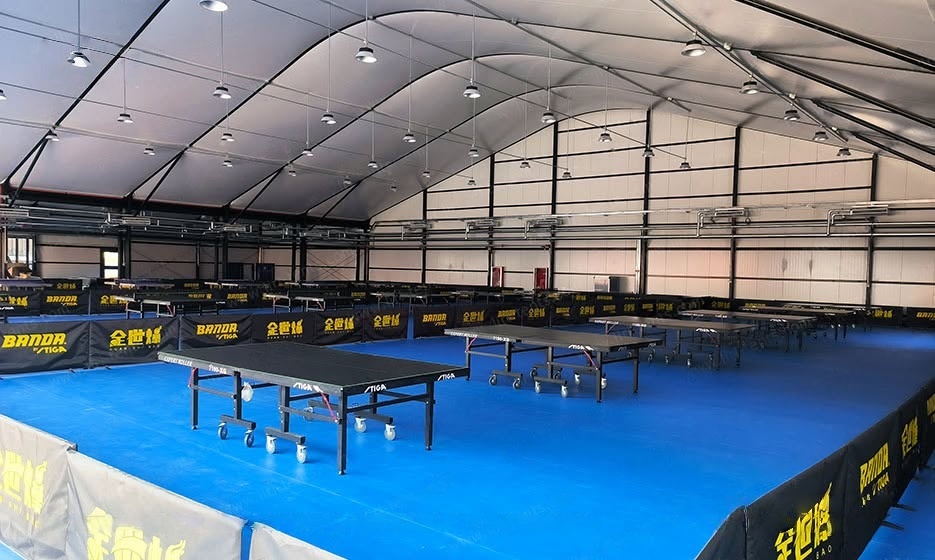
For a winterized fieldhouse, the most reliable solution is a rigid aluminum arch structure combined with a double-layer sandwich panel wall system.
Why sandwich panels are the right choice
| Feature | Benefit |
|---|---|
| Factory-bonded insulation | Consistent R-value, no settling or gaps |
| Steel or aluminum facings | Durable, impact-resistant, easy to clean |
| Pre-engineered joint system | Fast assembly, reliable sealing |
| Variety of thicknesses | Match insulation needs to your climate |
But don’t just look at panel specs. Performance depends on how the system handles:
- Panel-to-panel connections
- Corners and end walls
- Wall-to-base / ground interface
- Door and window openings
- Utility penetrations (HVAC, electrical, plumbing)
These are where winter comfort is won or lost.
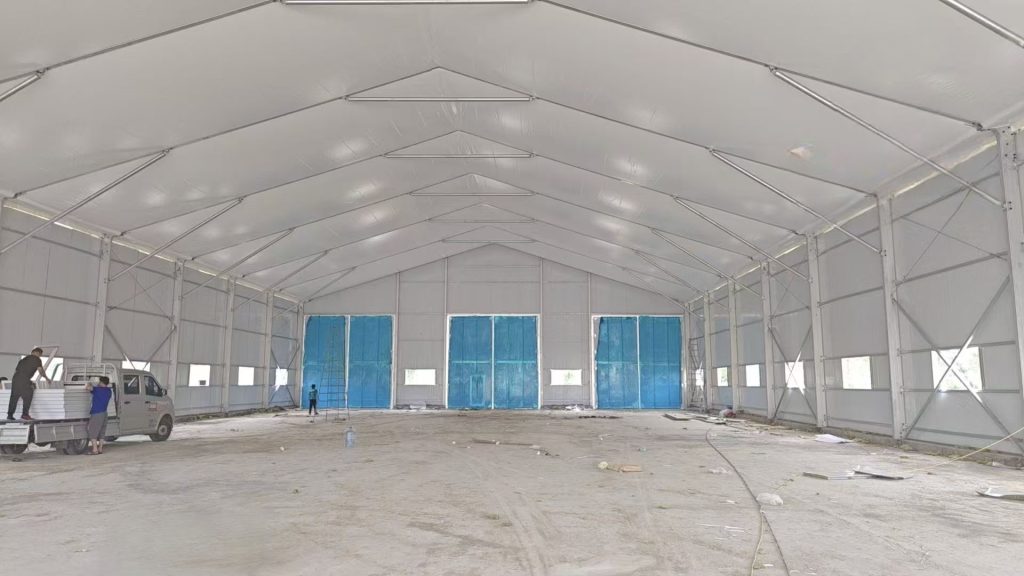
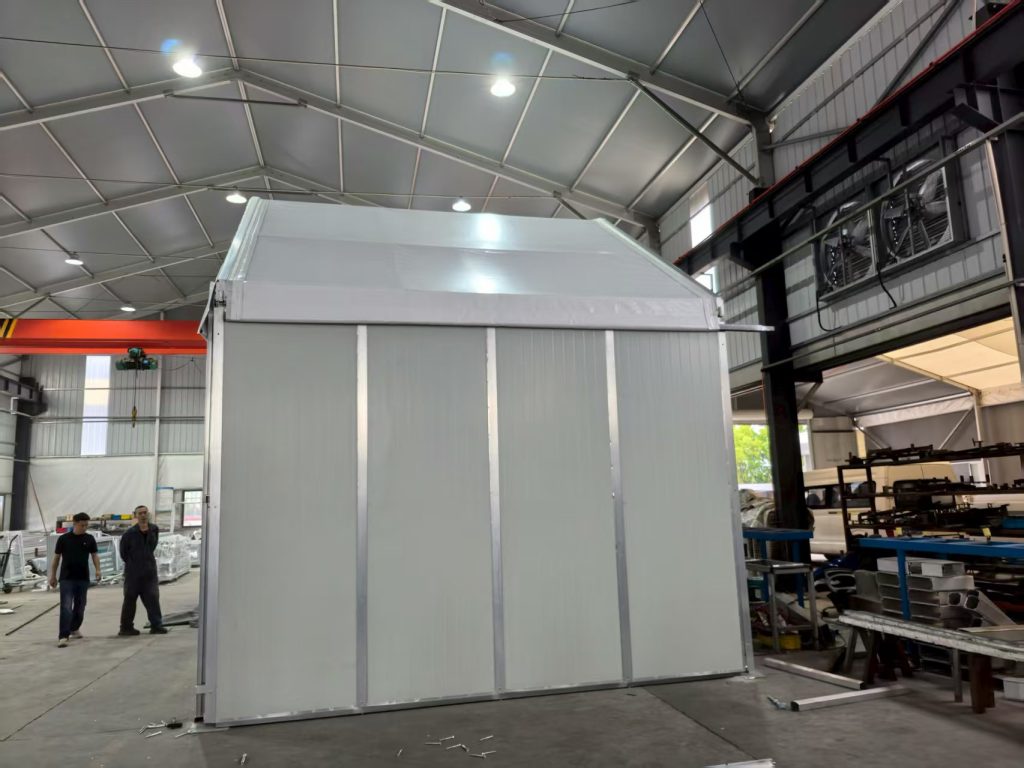
Panel Joints: The Most Critical Detail
In cold climates, every panel joint must do three things:
- Stop air leakage (priority #1)
- Manage rain and melting snow
- Allow any trapped moisture to escape
The “two-stage seal” approach is industry best practice
- Outer seal – handles weather exposure (UV, rain, snow). It doesn’t need to last forever.
- Inner seal – the critical airtight layer that keeps warm air inside.
- Drainage cavity between them – lets incidental moisture escape or dry naturally.
If the drainage path is blocked, the joint becomes a weak spot for condensation and ice formation.
Watch for these winter warning signs
- Cold streaks along panel seams (air leakage + thermal bridging)
- Condensation lines at joints or behind trim
- Ice forming on the base track
- Whistling drafts (pressure-driven air leaks)
Thermal Bridging: The Hidden Energy Drain
Any metal-framed structure has thermal bridging risks—especially at:
- Base rails and anchor points
- Connection brackets
- Door frames
- Structural connections
Thermal bridges don’t just waste energy. They create cold surfaces where condensation forms first.
How aluminum sandwich panel tents reduce thermal bridging
- Continuous insulation across the panel—no gaps at framing members
- Thermal breaks at connection points where needed
- Insulated door frames and thresholds designed as part of the envelope
Roof Options for Winter Performance
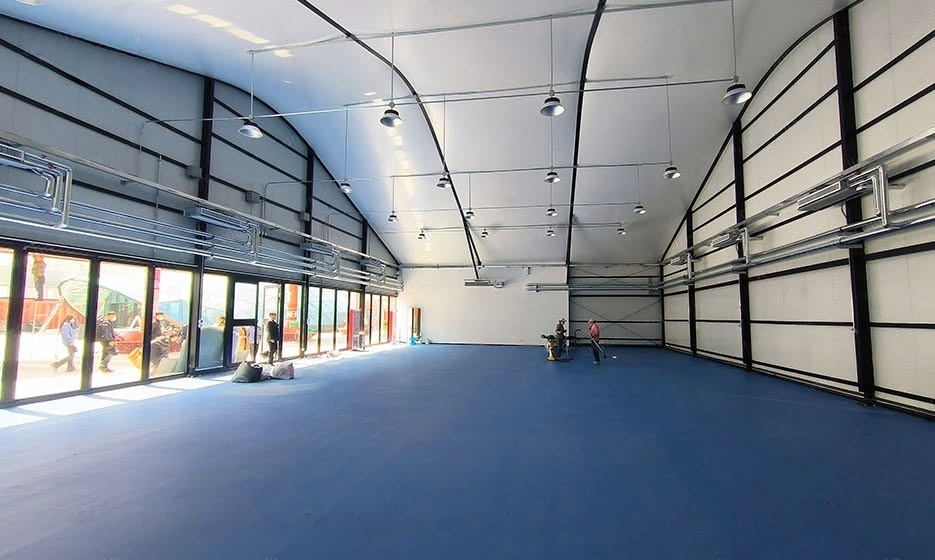
While walls do the heavy lifting, the roof matters too. Common approaches for aluminum arch tents:
| Option | Pros | Cons |
|---|---|---|
| Insulated sandwich panel roof | Consistent thermal performance, solid feel | Higher initial cost |
| Double-layer insulated fabric | Lighter, lower cost | Less durable, lower R-value |
| Single-layer fabric + interior insulation | Budget-friendly | More labor for installation |
For cold climates, insulated sandwich panel roofs deliver the best long-term performance and durability.
Buyer’s Checklist: What to Ask Every Supplier
Use this checklist when evaluating aluminum sandwich panel sports tent suppliers:
1) Envelope Scope & Drawings
- Clear thermal envelope description (walls, roof, base)
- Detail drawings for: wall-to-base, panel joints, corners, door openings, penetrations
2) Air Sealing Plan
- Primary air barrier material specified
- Joint sealing method (tapes, gaskets, sealants) + QC process
- High-risk points addressed: doors, louvers, HVAC curbs, utility penetrations
3) Condensation Prevention
- Design temperature and humidity assumptions stated
- Ventilation strategy defined (balanced ventilation preferred)
- Wet entry / snow melt management plan
4) Thermal Bridge Mitigation
- Major thermal bridges identified and addressed
- Door frame and threshold insulation strategy
- Base rail thermal treatment
5) Fire & Life Safety
- Fire performance documentation for materials
- Egress plan and winter-ready door hardware
- Engineering documentation for permitting support
When Aluminum Sandwich Panel Tents Are the Right Fit
Strong fit when you need:
- Fast timeline vs. permanent construction (weeks vs. months)
- Large clear-span training space with no interior columns
- Expandable or relocatable system
- Engineering documentation for permits
Poor fit when:
- You need permanent-building acoustics without interior finishing
- You have extreme moisture loads (e.g., adjacent pool) without serious dehumidification
- Site can’t support proper base/anchorage for snow and wind loads
Practical Example: JM TENT Solutions
If you’re evaluating suppliers, use the checklist above to guide your conversations. For reference:
- JM TENT Sports Tents – aluminum clear-span structures for various sports: Sports Tent
- Professional Aluminum Clear Span Sports Tent – designed for padel, tennis, and court sports: View product
- Curved Roof Designs – combining aesthetics with structural performance: Luxury Curved Roof Aluminum Event Tent
- About JM TENT – engineering and manufacturing background: About JM TENT
Next Steps
Turn this checklist into a one-page “Winterization Spec Sheet” to share with suppliers or attach to your RFP.
Request a tailored review: Share your target indoor temperature, flooring type, door count, and any local permit requirements. We’ll map the critical details for your specific winter installation.
